




On 20, 21, and 22 January 2026, DSA organised three skills-based training sessions aimed at preparing students for successful integration into the international job market after graduation, with the participation of over 100 students.The training programme was designed to equip students with strong argumentation skills that can be applied in both academic and professional working environments. The course was developed across three progressive levels, beginning with understanding argumentative thinking in reading and writing, moving on to applying argumentative thinking in professional Email communication, and culminating in using argumentative thinking rffectively in academic essays. This three-level structure enables students to develop the ability to identify main arguments, evaluate evidence, and engage with texts more critically and effectively. The programme focuses on supporting learners in communicating clearly, purposefully, and persuasively in professional contexts, while also strengthening their ability to structure ideas logically, support arguments with concrete evidence including numerical data and produce clear and coherent academic writing. Overall, the sessions aim to enhance students’ critical thinking, communication confidence, and academic writing competence, thereby supporting the development of professional skills required in international academic and professional environments. The following section presents reflections from participating students.
Reflection by Bui Hoang Anh: After joining the three sessions about working in an international environment, what I liked the most was how the program systematically developed argumentation skills and connected them directly to both academic study and real workplace communication. First, in section 1: Understanding arguments in reading and writing, I especially appreciated learning how to identify the structure of arguments in professional and academic texts. In an international working environment, the ability to clearly understand main ideas, claims, and supporting evidence is essential to avoid misunderstandings and respond accurately. This session helped me read more efficiently, evaluate the strength of arguments, and distinguish between well-supported opinions and weak reasoning. Second, in section 2: Using arguments in professional emails was the most practical for workplace application. In international organizations, emails are not only used to share information but also to persuade, propose solutions, and negotiate effectively. I liked how the session focused on building emails with a clear logical flow: stating the purpose, providing reasons, making suggestions, and closing professionally. This helped me realize that effective emails depend more on structure and tone than on length. Finally, in section 3: Using arguments in academic assays helped me see the strong connection between academic writing and professional communication. Skills such as developing coherent arguments, selecting appropriate evidence, and presenting balanced viewpoints are not only useful for essays, but also essential for meetings, reports, and presentations in an international context. I particularly valued the emphasis on critical thinking and objectivity, which are crucial when working with people from different cultural and professional backgrounds.
In conclusion, what I liked most about these sessions was the way they bridged theory and practice. The program did not only improve my reading and writing skills, but also strengthened my professional communication, logical thinking, and confidence in working in an international environment.
Reflection by Pham Nguyen Kim Uyên: After joining the sessions about working in an international environment, what I liked the most was learning how to use arguments clearly and logically in both professional emails and academic essays. One reason I found this valuable is that the lessons helped me understand how ideas should be organized, not just what to say. In section 2, I learned that a professional email needs a clear purpose, a direct reason, and supporting details so the reader can quickly understand the message. In section 3, the same idea was applied to academic writing through the thesis statement, topic sentences, reasons, and evidence. For example, the “hamburger model” made it easier for me to see how each paragraph works: the topic sentence introduces the idea, the reason explains it, and the evidence supports it. This structure helped me connect paragraphs smoothly and avoid adding unnecessary information.
Therefore, I liked these sessions the most because they taught me a practical and transferable way to communicate ideas clearly in an international academic and professional environment.

Hamburger model
Reflection by Hoang Le Xuan Lan: Speaking of session 3, our speaker amplified how unique, creative, and conforming to scientific basis a perspective/input is can really affect a student’s work outcomes – something I have always struggled to understand when doing, receiving assignments at our university. It shed light on me that perhaps what I thought highly of in my academic essays weren’t persuasive / insightful enough for instructors to give high marks, and I need to practice a lot more on delivering with concise / coherence. As tormented as I am, I really hope to know what the differences between a B essay and an A+ essay is to every instructor.
Reflection by Phan Ngoc Ha Phuong: After joining the sessions about working in an international environment, what I liked most was the emphasis on cultural awareness and communication styles. The sessions helped me understand that effective collaboration in international teams is not only about language proficiency, but also about recognizing different values, attitudes toward hierarchy, time management, and feedback.
The real-life examples and discussions were particularly valuable because they showed how small cultural misunderstandings can escalate into larger workplace conflicts if not handled properly. Learning how professionals adapt their communication to different cultural contexts made the topic practical and relevant, especially for my future career in a globalized working environment.


Reflection by Nguyen Quynh Nhi: Overall, the sessions encouraged me to be more open-minded, flexible, and respectful when working with people from diverse backgrounds, which I believe is an essential skill in today’s international workplace.
The three sessions provided a clear overview of how arguments are applied across different contexts, including reading and writing, professional emails, and academic essays.
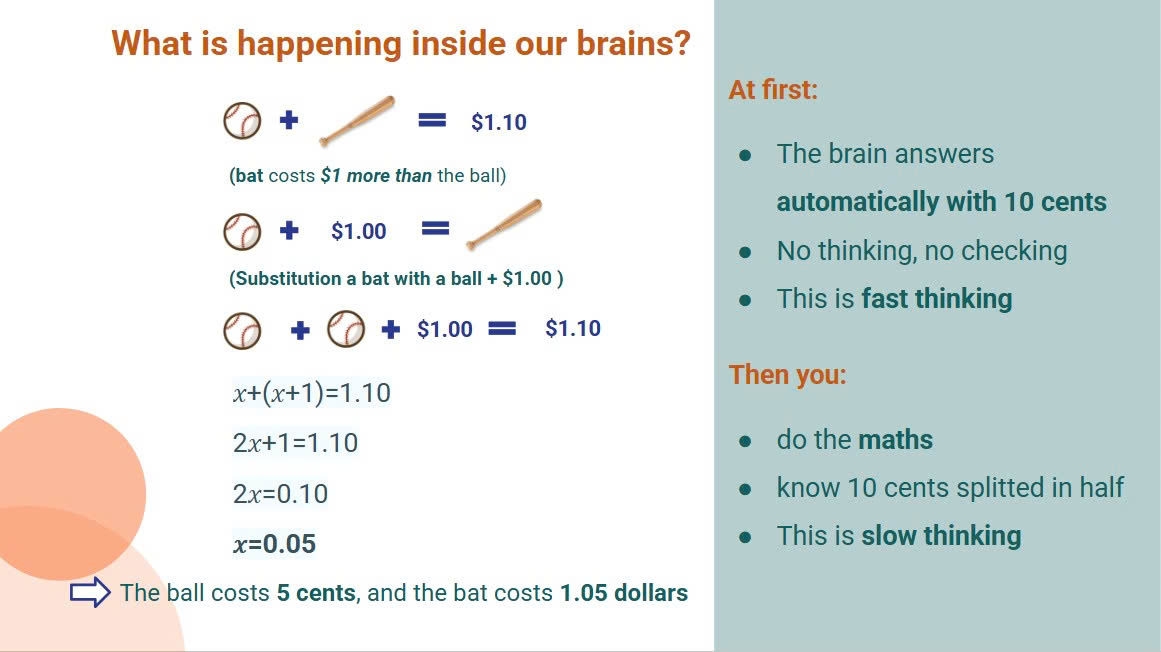
Topic 1: Understanding Arguments in Reading and Writing: The first topic began with a well-known question: “A bat and a ball cost $1.10 in total. The bat costs $1 more than the ball. How much does the ball cost?” Most people instinctively answer 10 cents; however, the correct answer is 5 cents. This example illustrates how intuition can sometimes lead to hasty conclusions and, consequently, inaccurate decisions. In contrast, argumentation emphasises that opinions should not be formed based on spontaneous thinking alone, but rather through careful consideration and evaluation from multiple perspectives. Therefore, arguments allow information to be presented in different ways, which can influence how others perceive and understand an issue.
Topic 2: Using Arguments in Professional Emails: When constructing an argument, it is essential to avoid making judgements solely from a personal perspective. Instead, one should consider others’ viewpoints and seek evidence for assumptions that are not yet certain. For example, imagine the situation: “You think that this group project is unfair. Some people are lazy,” and you want to email the group leader about this issue. Typically, people may immediately complain about other members being “lazy” and feel that they are doing most of the work. However, argumentation does not support such an approach, as this claim is subjective and based on incomplete information – you may not know what others are doing or how much they are contributing. Rather than complaining, it is more appropriate to discuss task distribution, clarify individual responsibilities, and gather sufficient evidence before reaching a conclusion.
In addition, argumentation is highly effective in professional email writing. As recipients often receive a large volume of emails and have multiple tasks to manage, emails should be concise and focused on key points. An effective email should clearly answer three questions: What is the main point?; What is the purpose of the email?; What action does the writer expect the reader to take?
This approach helps ensure clarity and increases the likelihood of receiving a prompt response.
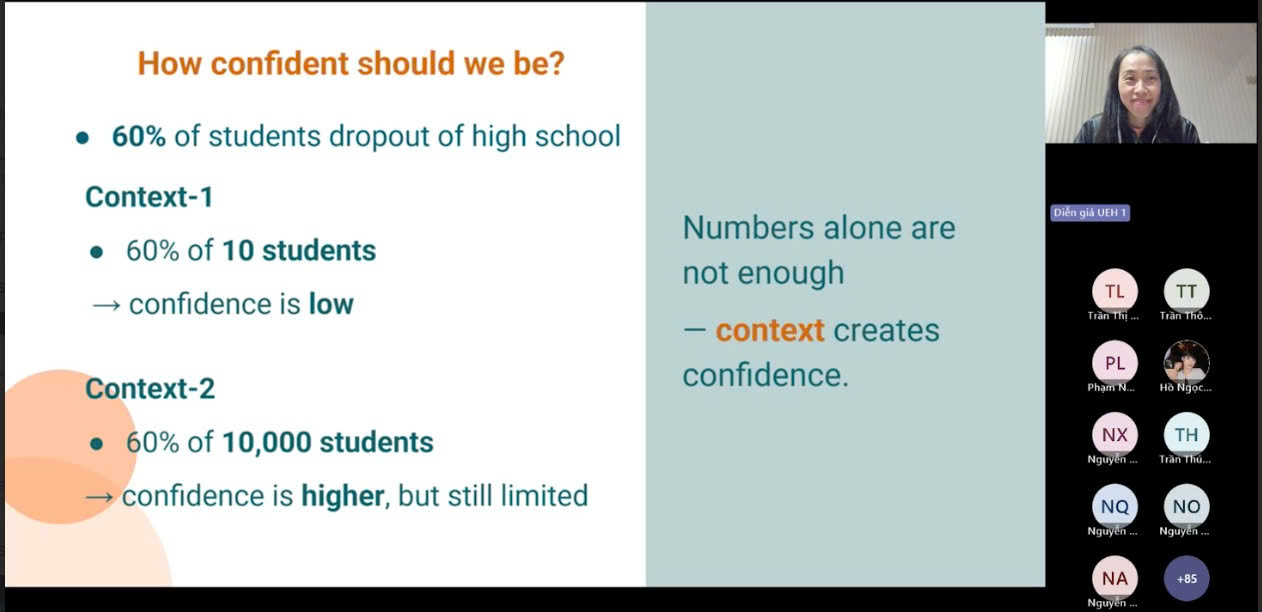
Topic 3: Using Arguments in Academic Essays: Numbers and concrete evidence play a crucial role in enhancing the effectiveness of academic essays. Statistical data and specific evidence help make arguments more objective and persuasive. For instance, the statement “This plan may increase costs by 15%, based on last year’s financial report” is more convincing than “This plan will be very expensive.” Furthermore, academic essays are often structured using the “hamburger” method. According to this approach, an essay should include the following key components: a topic sentence, reasons or evidence, illustrative examples, and a concluding sentence that links back to the main idea.
If you have any questions, please contact the organizing committee via the hotline: 028.7306.1976, ext. 1013 for support.