

For UEH students studying in a dynamic, competitive, and rapidly changing environment, scientific thinking is not only an academic skill but also a foundation for adapting to work and society in the future. This article focuses on three specific manifestations of scientific thinking: evidence-based learning and working, planning-based learning and working, and the development of critical thinking. It also suggests practical approaches that can be applied immediately in daily lives.
Many people, upon hearing the term “scientific thinking”, immediately picture laboratories, researchers, or complex equations. However, according to the perspective of educator John Dewey in How We Think (1910), scientific thinking is first and foremost the capacity for reflective thought, the ability to examine evidence and draw conclusions based on reasoning rather than intuition. In other words, it is a principled way of operating the mind that enables people to learn more effectively, work more systematically, and make sounder decisions in life.

Scientific thinking helps people learn and work more effectively
(Source: interestingengineering.com)
Evidence-Based Learning and Working
One of the most important characteristics of scientific thinking is the ability to think based on evidence and solid grounding. According to UNESCO’s research on Media and Information Literacy (2021), the ability to evaluate the reliability of information sources is becoming an essential competency for young people in the digital age.
In academic life, students are constantly exposed to enormous volumes of information: academic documents, short videos on social media, podcasts, advice from friends, or study tips shared widely across the internet. However, not all information is trustworthy. Every claim, before being accepted as true, must be verified against real data or grounded in rigorous logical reasoning.
According to research by Sackett et al. (1996), evidence-based practice is defined as the conscientious, explicit, and judicious use of the best available evidence in making decisions. In the context of learning, this means not drawing conclusions based on intuition, habit, or unverified hearsay.
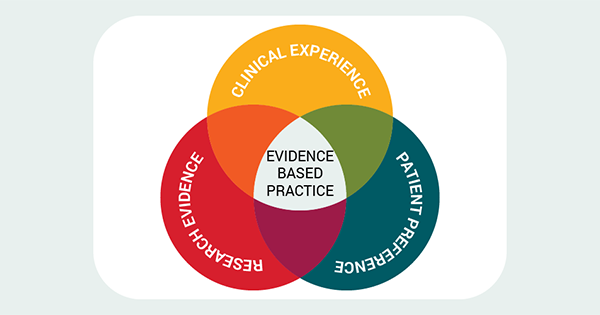
Evidence-based Practice
(Source: wounds-uk.com)
Scientific thinking requires learners to distinguish between information and evidence, between personal belief and verified fact. For example, some students may believe that staying up late improves productivity because nighttime is quieter. However, many studies in neuroscience and sleep science indicate that sleep deprivation reduces memory retention and concentration. Relying only on anecdotal experiences without verification can easily lead to ineffective or even harmful habits.
There are several reasons why students often neglect information verification. Research by Tran Thi Minh Ngoc (2023) published in the VNU Journal of Science suggests that many Vietnamese students still receive information passively, ask few critical questions, and depend more on memorization than analytical thinking. Meanwhile, in The Filter Bubble (2011), Eli Pariser argues that social media platforms create “filter bubbles,” continuously exposing users to information aligned with their existing beliefs. Hartmann et al. (2025) describe this phenomenon as an “echo chamber,” where people mainly encounter opinions that reinforce their assumptions while opposing perspectives are minimized or excluded.
To develop evidence-based thinking, students can begin with small habits. When reading an article or watching online content, they should ask themselves questions such as: “Is this source trustworthy?”, “What evidence supports this conclusion?”, and “Are there any studies or reliable references mentioned?” These questions help prevent unconscious information consumption.
When learning new concepts, psychologist Robert A. Bjork (1994) proposed the idea of “desirable difficulties”: instead of simply memorizing information, learners should actively seek counterexamples or situations that could challenge the claim being studied.
Similarly, instead of copying lecture slides word for word, students can organize notes using a “claim – evidence – conclusion” structure, as recommended by Dunlosky et al. (2013). For instance, if a course discusses the impact of social media on mental health, students can record the main argument, supporting evidence, and then formulate their own conclusion. This method encourages deeper understanding rather than superficial memorization.
As Daniel Kahneman emphasized in Thinking, Fast and Slow (2011), major decisions should be based on actual data rather than assumptions that are merely believed to be true.
Planning and Structured Thinking
If evidence-based thinking helps people understand problems accurately, planning transforms understanding into effective action.
Today’s students are constantly busy: attending classes, completing group assignments, joining clubs, interning, and working part-time jobs. Yet busyness does not necessarily mean effectiveness. Research on time management by Macan et al. (1990) highlights the important distinction between busyness and effectiveness. Busyness refers to having many tasks, while effectiveness refers to accomplishing the tasks that truly matter.
Many people misunderstand planning as creating a timetable. However, according to management scholar Peter Drucker (1967), a genuine plan is a sequence of actions with clear objectives, defined priorities, and contingency strategies for unexpected situations. A good plan answers not only “What should I do?” but also “Why should I do it?”, “When should I do it?”, and “What happens if something goes wrong?”
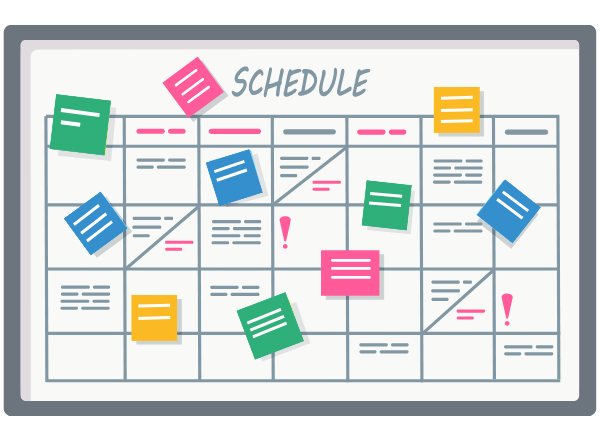
Developing the habit of planning to achieve goals most effectively
(Source: planningpme.com)
According to Locke and Latham (2002), there are four common reasons why plans fail: vague goals, unrealistic ambitions, failure to account for variables, and lack of regular self-evaluation. Some may set goals that are too vague, such as “study harder” or “read more books,” without measurable standards. Others set goals that are overly ambitious, such as studying ten hours every day without rest. When they fail to meet these expectations, motivation quickly disappears. Many plans also collapse because of ignoring uncertainty. Group assignments may take longer than expected. Extra classes may overlap with deadlines. Physical health, emotional well-being, and unexpected incidents can all disrupt schedules. If a plan is too rigid, even a small disruption can derail everything.
So how can students build more effective plans? One practical approach is the SMART framework proposed by Doran (1981): goals should be Specific, Measurable, Achievable, Relevant, and Time-bound. Instead of saying “I will improve my English,” set a more concrete goal, such as “I will study 20 IELTS vocabulary words every evening for 30 minutes.”
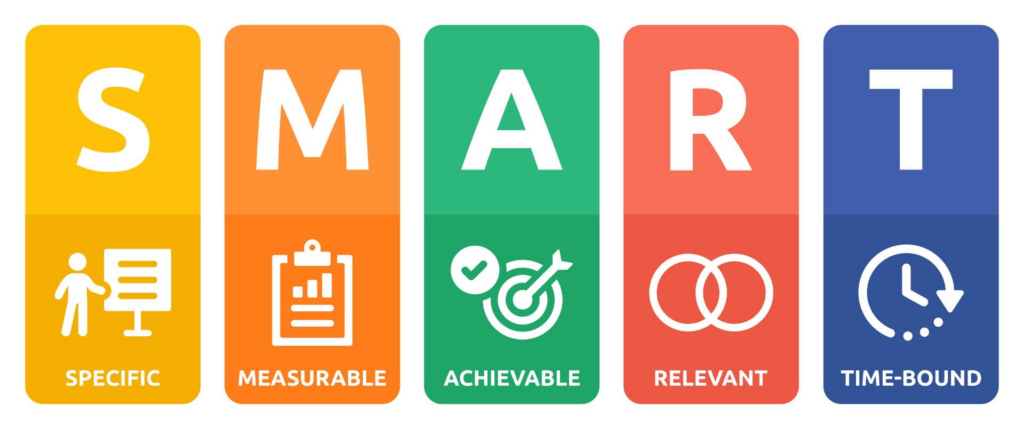
The S.M.A.R.T model
(Source: blogs.iu.edu)
Another useful method is time-blocking. According to Cal Newport in Deep Work (2016), time-blocking involves dividing the day into dedicated blocks of time, each reserved for a specific task. This approach encourages intentional prioritization and minimizes reactive multitasking. A recent study by Smits et al. (2025) published in Behavioral Sciences found that structured time allocation significantly improved students’ academic productivity.
At the end of each week, spend 15 minutes reviewing what has been completed, what has been delayed, and why. Psychologist Zimmerman (2002) refers to this habit as “self-regulated learning”, a process of continuous reflection and adjustment.
Developing Critical Thinking
Among the three aspects of scientific thinking, critical thinking is perhaps the most misunderstood. Many individuals assume that critical thinking means constantly criticizing or opposing others. However, according to the Delphi Report led by Facione (1990), critical thinking is a purposeful and self-regulated process of judgment involving interpretation, analysis, evaluation, and inference. A critical thinker is not someone who argues excessively, but someone who knows how to ask meaningful questions, identify logical fallacies, and separate emotion from reasoning. Critical thinking is considered one of the four core competencies of 21st-century global citizens by Trilling and Fadel (2009), alongside communication, collaboration, and creativity, commonly known as the “4C skills.”
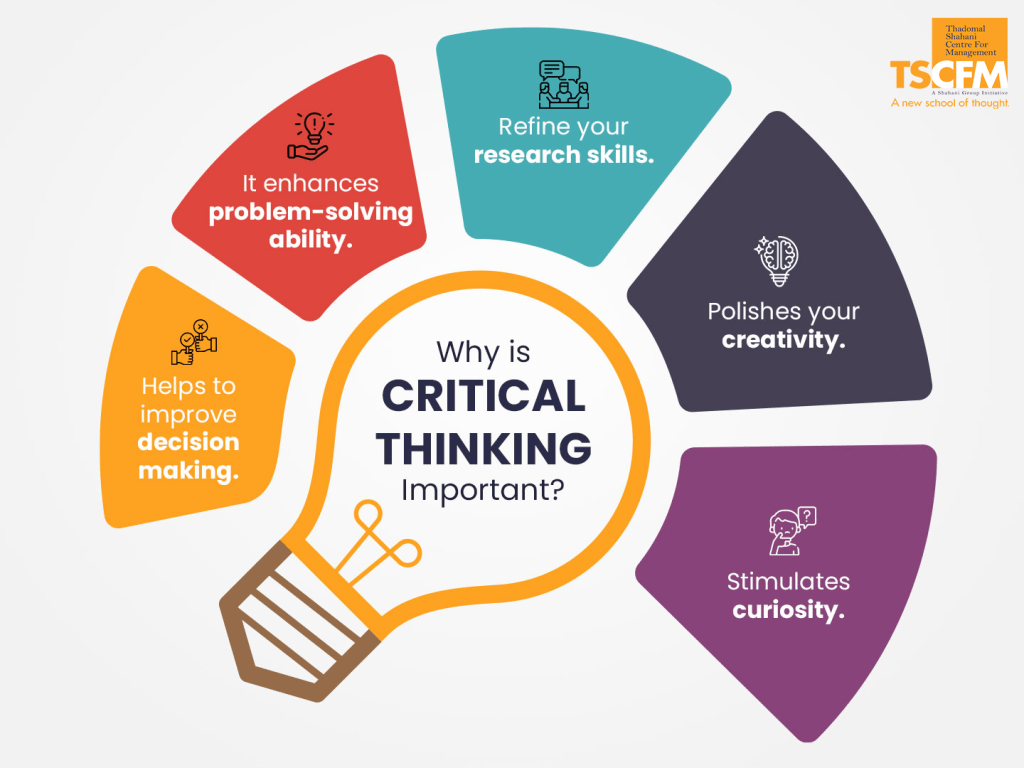
Developing critical thinking to solve problems effectively
(Source: tscfm.org)
In practice, many students struggle to develop critical thinking because of common psychological barriers. One of these is confirmation bias. According to psychologist Raymond Nickerson (1998), confirmation bias is the tendency to search for and prioritize information that supports existing beliefs while ignoring contradictory evidence.
Another barrier is the bandwagon effect. In The Crowd (1895), Gustave Le Bon argued that people tend to believe something is true simply because many others believe it. On social media, highly popular opinions are often mistaken for accurate ones. Yet history repeatedly shows that the majority opinion is not always correct.
Many students also hesitate to ask questions or challenge ideas because they fear being judged. As a result, academic discussions sometimes remain superficial instead of exploring issues in depth.
To strengthen critical thinking, practice “steelmanning,” a technique proposed by philosopher Daniel Dennett (2013). Before criticizing an opposing view, one should first present that argument in the strongest and most convincing form possible. This practice helps prevent misunderstandings and encourages intellectual honesty.
Recognizing logical fallacies is equally important. In Logically Fallacious (2015), Bo Bennett analyzes common reasoning errors such as ad hominem attacks, hasty generalization, and slippery slope arguments. Understanding these fallacies helps students become more discerning when encountering controversial information.
Universities provide many opportunities to practice critical thinking through debates, seminars, group discussions, and academic presentations. Research by Abrami et al. (2015), involving approximately 2,500 students, found that structured discussion-based activities are among the most effective environments for developing critical thinking skills.
Scientific Thinking as a Way of Life
These three dimensions of scientific thinking are deeply interconnected. According to Pintrich’s (2002) self-regulated learning model, effective learning requires a balance between knowledge, planning strategies, and self-reflection. Evidence helps us understand where we are. Planning helps us understand where we are going. Critical thinking helps ensure that we do not move in the wrong direction.
More importantly, scientific thinking is not an innate talent but a skill that can be developed. As psychologist Diane Halpern (2014) emphasized, nobody is born naturally knowing how to ask the right questions, manage time effectively, or analyze arguments rigorously. These abilities are cultivated through observation, practice, and continuous adjustment.
In an era of rapid technological change, expanding artificial intelligence, and overwhelming amounts of information, the ability to think based on evidence, plan systematically, and evaluate critically will become essential for sustainable learning and working.
For UEH students, developing scientific thinking can begin with very small actions: asking “why” before accepting a claim, spending five minutes planning before starting a task, or trying to examine an issue from the opposite perspective before drawing a conclusion. These small habits are the foundation for becoming not only better learners, but also independent thinkers capable of navigating an increasingly complex world.
News and Images by: Department of Student Affairs (DSA)
REFERENCES
Abrami, Philip & Bernard, Robert & Borokhovski, Eugene & Waddington, David & Wade, C. Anne & Persson, Tonje. (2015). Strategies for Teaching Students to Think Critically: A Meta-Analysis. Review of Educational Research. 85. 275-314. https://doi.org/10.3102/0034654314551063.
Bjork, R. A. (1994). Memory and Metamemory Considerations in the Training of Human Beings. In J. Metcalfe & A. Shimamura (Eds.), Metacognition: Knowing about Knowing. https://doi.org/10.7551/mitpress/4561.003.0011.
Bennett, B. (2015). Logically Fallacious: The Ultimate Collection of Over 300 Logical Fallacies.
Dennett, D. (2013). Intuition Pumps and Other Tools for Thinking. W. W. Norton & Company.
Dewey, J. (1910). How We Think. D.C. Heath & Co. https://doi.org/10.1037/10903-000
Doran, G. T. (1981). There’s a S.M.A.R.T. Way to Write Management’s Goals and Objectives. Management Review, 70(11), 35-36.
Drucker, P. F. (1967). The Effective Executive. Harper & Row.
Dunlosky J, Rawson KA, Marsh EJ, Nathan MJ, Willingham DT. (2013). Improving Students’ Learning With Effective Learning Techniques: Promising Directions From Cognitive and Educational Psychology. Psychol Sci Public Interest. 2013 Jan;14(1):4-58. https://doi.org/10.1177/1529100612453266. PMID: 26173288.
Facione, P. A. (1990). Critical Thinking: A Statement of Expert Consensus for Purposes of Educational Assessment and Instruction. The Delphi Report, The California Academic Press.
Halpern, D. F. (2014). Thought and Knowledge: An Introduction to Critical Thinking (5th ed.). Psychology Press.
Hartmann, M., et al. (2025). Echo chambers in digital environments: A comprehensive review. Journal of Digital Society. https://doi.org/10.1007/s42001-025-00381-z
Kahneman, D. (2011). Thinking, Fast and Slow. Farrar, Straus and Giroux.
Le Bon, G. (1895). The Crowd: A Study of the Popular Mind. Penguin Classics.
Locke, Edwin & Latham, Gary. (2002). Building a Practically Useful Theory of Goal Setting and Task Motivation. American Psychologist. 57. 705-717. https://doi.org/10.1037/0003-066X.57.9.705.
Macan, Therese & Shahani, Comila & Dipboye, Robert & Phillips, Amanda. (1990). College Students’ Time Management: Correlations With Academic Performance and Stress. Journal of Educational Psychology. 82. 760-768. https://doi.org/10.1037//0022-0663.82.4.760.
Newport, C. (2016). Deep Work: Rules for Focused Success in a Distracted World. Grand Central Publishing.
Nickerson, Raymond. (1998). Confirmation Bias: A Ubiquitous Phenomenon in Many Guises. Review of General Psychology. 2. 175-220. https://doi.org/10.1037/1089-2680.2.2.175.
Ngọc, T. T. M. (2023). Đạo đức sinh viên Việt Nam: Thực trạng và giải pháp. VNU Journal of Science.
Nugent, Annita & Lodge, Jason & Carroll, Annemaree & Bagraith, Rupert & Macmahon, Stephanie & Matthews, Kelly & Sah, Pankaj. (2018). Higher Education Learning Framework: An evidence-informed model for university learning. https://doi.org/10.13140/RG.2.2.20761.47207.
P21 – Partnership for 21st Century Learning (2019). Framework for 21st Century Learning Definitions.
Pariser, E. (2011). The Filter Bubble: What the Internet Is Hiding from You. Penguin Press.
Pintrich, P (2002). The Role of Metacognitive Knowledge in Learning, Teaching, and Assessing. Theory into Practice, 41, 219-226. https://doi.org/10.1207/s15430421tip4104_3
Sackett DL, Rosenberg WM, Gray JA, Haynes RB, Richardson WS. (1996). Evidence-based medicine: what it is and what it isn’t. BMJ. 1996 Jan 13;312(7023):71-2. https://doi.org/10.1136/bmj.312.7023.71. PMID: 8555924; PMCID: PMC2349778.
Smits, E. J. C., Wenzel, N., & de Bruin, A. B. H. (2025). Investigating the Effectiveness of Self-Regulated, Pomodoro, and Flowtime Break-Taking Techniques Among Students. Behavioral Sciences, 15. https://doi.org/10.3390/bs15070861
Trilling, B., & Fadel, C. (2009). 21st Century Skills: Learning for Life in Our Times. Jossey-Bass.
UNESCO (2021). Media and Information Literacy: A Curriculum for Educators and Learners. UNESCO Publishing.
Zimmerman, Barry. (2002). Becoming a Self-Regulated Learner: An Overview. Theory Into Practice. 41. 64-70. https://doi.org/10.1207/s15430421tip4102_2.