

Globalization has made international cultural exchange and integration an inevitable trend of the modern era. With a history spanning over 4,000 years, Vietnam proudly preserves its unique cultural identity and enduring traditional values, contributing meaningfully to the world’s cultural landscape. Like an ever-flowing source, Vietnamese culture continues to radiate its values and affirm its position within the vibrant mosaic of global culture.
Cultural Exchange: A Two-Way Story
In today’s interconnected world, cultural exchange is an inevitable phenomenon, a space where different cultures meet, interact, and blend to create new values. For Vietnam, this process is not merely about absorbing foreign influences but also about harmonizing them within the nation’s own identity. At the same time, Vietnamese culture actively extends beyond national borders, leaving a lasting impression on international audiences.
The dual process of reception and dissemination has enriched Vietnam’s social and cultural life, affirming the nation’s creativity, adaptability, and inclusivity in the modern era.
Vietnam has demonstrated remarkable flexibility in localizing global cultural trends, transforming them into new inspirations infused with national character. From music and fashion to cuisine and lifestyle, foreign elements have been creatively “Vietnamized,” reflecting the distinctive spirit and aesthetics of the Vietnamese people.
Beyond media and cultural events, this spread of culture is also carried forward by the Vietnamese diaspora, silent cultural ambassadors who take pride in their roots and strive to share the beauty of Vietnamese traditions with the world.

Cultural exchange activities have increasingly become professional and impactful channels for enhancing Vietnam’s image and position on the global stage. Through art performances, exhibitions, and cultural showcases, Vietnam has brought its unique identity closer to the world, not only as a country rich in traditions but also as a dynamic, creative, and forward-looking nation.
Young Generation: Breathing New Life into Tradition
In the era of integration, national identity is not only the root that nourishes the soul but also a compass guiding Vietnamese youth in defining themselves on the global map. The younger generation has been revitalizing traditional values with creativity and innovation.
A notable example is the hit music video “Bắc Bling”, which cleverly integrates folk cultural elements of Bắc Ninh, from village temples and betel leaves to festive atmospheres, into modern music and visuals. Featuring nearly 300 local residents, the production becomes not just a nostalgic representation but a cultural event where artists and communities co-create a story about their homeland, demonstrating the creative fusion between tradition and modernity.

In fashion, young Vietnamese designers are leading a wave of innovation by combining traditional materials such as silk, brocade, and handwoven textiles with contemporary aesthetics. Alongside artistic expression, there is a growing awareness of sustainability, with designers favoring natural materials to minimize environmental impact. Through these efforts, traditional craftsmanship finds new life while showcasing Vietnam’s graceful Eastern elegance.
UEH students’ project “Lái Lụa” (“Silk Journey”) with the theme “Tea Fragrance – Silk Hues” exemplifies this creative harmony between tradition and modern design.
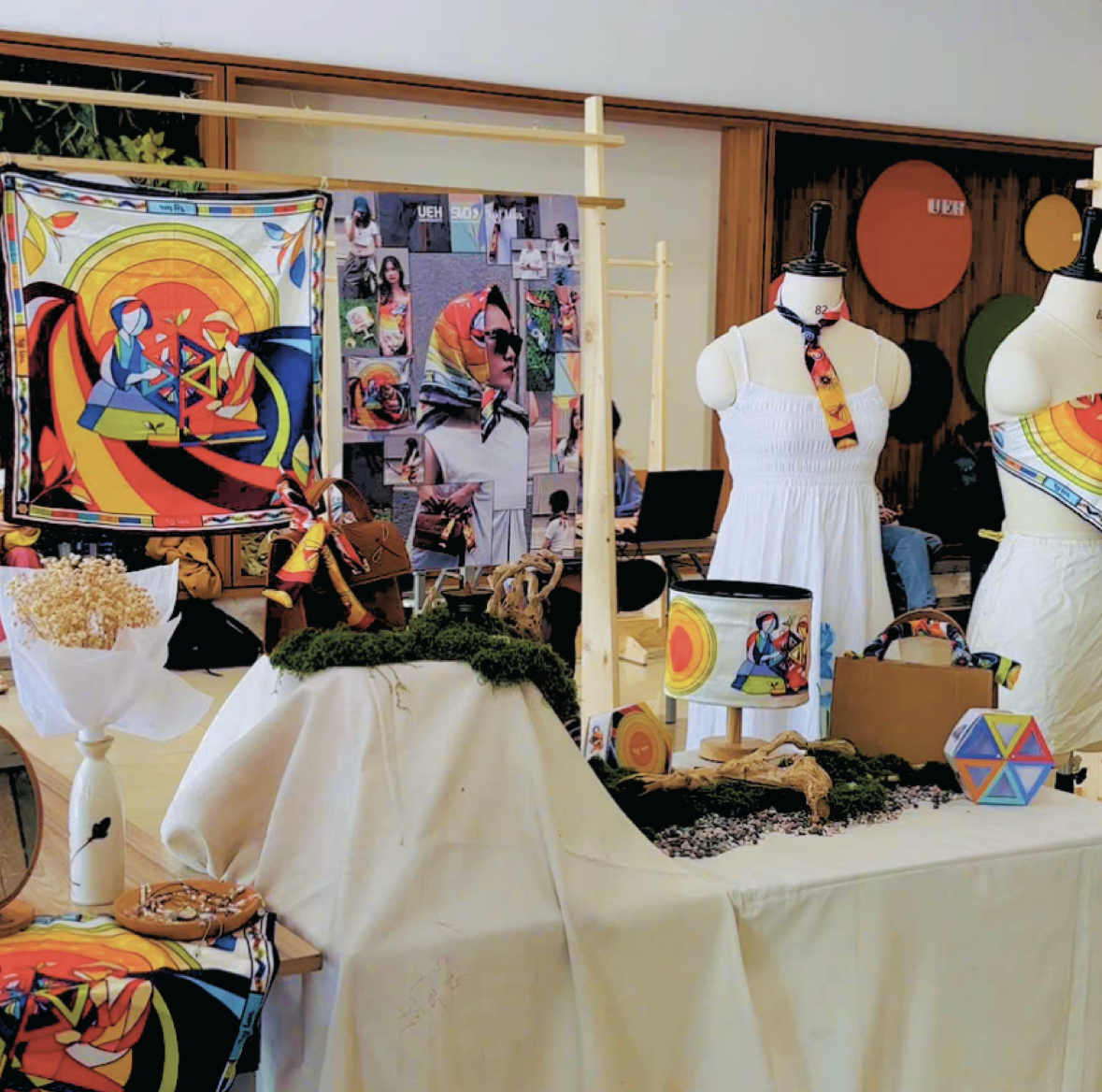
Vietnamese cuisine is another arena where tradition and creativity converge. Dishes from around the world have been adapted and localized, while traditional Vietnamese foods such as pho, bun cha, and banh mi continue to win international acclaim and appear on restaurant menus across continents. This culinary exchange, driven by the passion of the younger generation, has helped Vietnamese gastronomy gain global recognition.

Preserving Cultural Heritage in the Digital Era
In the face of global challenges such as climate change and urbanization, preserving cultural heritage has become increasingly complex. Advanced technologies now play a vital role in safeguarding these values and promoting sustainable cultural development.
Technologies such as Virtual Reality (VR), Augmented Reality (AR), and Artificial Intelligence (AI) are revolutionizing the preservation of Vietnamese heritage by creating interactive and immersive digital experiences. They enable the reconstruction of historical spaces, reduce human impact, and expand public access to national heritage. Though virtual in form, these technologies generate real cultural value, contributing both to preservation and tourism development.
At the Vietnam National Museum of History, over 50,000 artifacts have been digitized in 3D, allowing visitors to explore exhibits anytime, anywhere. In Hoi An, AR applications recreate the vibrancy of ancient trading ports and traditional festivals, bringing heritage to life for international audiences.
In the digital age, social media platforms have become vital communication tools for heritage institutions in Vietnam. With broad reach and high engagement, these platforms help make traditional culture more accessible, engaging, and relevant to young audiences.
Reality TV programs such as “2 Days 1 Night,” “Brilliant Journey,” and “The Amazing Race Vietnam” also serve as powerful channels for cultural storytelling, weaving local customs and traditions into every episode. These creative approaches ensure that cultural heritage remains alive — in every story, every frame, and every touch of the screen — inspiring generations to come.
In the context of globalization, Vietnam faces both opportunities and challenges in preserving its cultural identity. Sustainable cultural development strategies must ensure the protection of traditional values while promoting adaptability and innovation.

As Master Nguyen Tran Huong Thao emphasizes, “National identity is the foundation through which Gen Z shapes its individual identity,” and language is the core medium of that identity. In an era where slang, internet jargon, and foreign expressions dominate online spaces, promoting love and respect for the Vietnamese language is crucial to maintaining the nation’s cultural foundation.
While innovation in art and culture should be encouraged, modernization must not compromise authenticity. From music and fashion to cinema and theater, creative renewal should aim to bring heritage closer to the public without succumbing to short-term commercial trends. “Innovate without losing color” should serve as a guiding principle for cultural producers and artists — a responsibility as much as an artistic choice.

Effective cultural development requires community engagement and individual initiative. Encouraging youth participation in reinterpreting and revitalizing heritage transforms preservation into a creative and participatory process. When young people are empowered to reinterpret and share their culture, heritage truly lives on, evolving with the times.
Cultural exchange is more than a national policy, it is a shared human journey that connects civilizations in the era of globalization. Defining and expressing Vietnamese identity in this flow is both a responsibility to preserve tradition and an opportunity to affirm the nation’s cultural position on the world map.
With creativity, openness, and pride in their roots, UEH students continue to play a vital role in this journey, preserving, innovating, and sharing Vietnamese culture with the world, strengthening the bridge between Vietnam and the global community.


Pillar: Community
News & Photos: Department of Student Affairs (DSA)
References:
Nguyen Tran Huong Thao (2024). Growing Up in a Culturally Hybrid Era: National Identity as a Foundation for Gen Z’s Personal Identity. Advertising Vietnam.
Communist Review (2018). Cultural Globalization and the Contemporary Model of Vietnam’s Cultural Development.
Thanh Nien (2025). Why “Bắc Bling” Became a Viral Sensation.
Nhan Dan (2024). Optimizing Cultural Values and Preserving Heritage.