

In modern society, sexual harassment is no longer a series of isolated incidents hidden behind closed doors. It has become a pressing social issue that demands attention and action from every individual and the wider community. Yet, amid the fragile boundary between genuine love and behaviors disguised under the name of affection, differences in perspectives on sexuality and harassment between Eastern and Western cultures have left many young people confused and insufficiently aware. These are precisely the questions addressed by the talk show “Sexual Harassment – Stay Silent or Speak Up?”, which attracted nearly 400 students to Hall B1.302 on the morning of October 15, 2025.
The program was designed with an open and approachable atmosphere, bringing together experts in sociology, sexology, law, and students. Its aim was to provide knowledge and skills to help participants recognize and prevent sexual harassment, while encouraging young people to speak up, protect themselves and others, and work toward a safe, civilized, and respectful society.
The talk show centered on three key themes: Understanding sexuality for healthy intimate relationships; Understanding sexual harassment; How does the law address sexual harassment?
At the opening of the program, Dr. Pham Thi Thuy, a sociologist and clinical psychology expert, posed a series of thought-provoking questions about openness, consent, and the boundary between affection and abuse in relationships. She highlighted how discussions around sexuality remain difficult to open up in Vietnam, where traditional norms and moral values still exert strong influence. At the same time, she guided the guest speakers to explore psychological and legal perspectives, helping participants, especially Gen Z students gain a more comprehensive understanding that sexual harassment is not merely a moral issue, but one that directly relates to physical health, mental well-being, and fundamental human rights, and therefore must be taken seriously.
The speakers devoted particular attention to clarifying the concept of “consent” in sexual relationships. They emphasized that consent must be built on voluntariness, full awareness, and the complete absence of pressure or coercion. Alongside this, they warned of the serious legal consequences that may arise when consent is violated, helping students better understand bodily autonomy and ways to protect themselves.
With her warm and engaging communication style, Dr. Nguyen Lan Hai pointed out an alarming reality: many young people are becoming victims of abuse disguised as love. These behaviors, which may initially appear harmless, are in fact “traps” of sexual harassment that leave deep and long-lasting psychological scars. Adding a legal perspective, Lawyer Tran Thi Ngoc Nu offered a sharp analysis, warning that even consent can become a legal “trap” once a relationship ends. Therefore, students must truly understand the concept of consent and equip themselves with skills to preserve clear evidence in order to protect themselves from the risk of false accusations such as “sexual assault,” “physical violation,” or even being counter-accused of sexual harassment.
During the program, Dr. Nguyen Lan Hai shared a striking observation: “Vietnamese people have the longest childhood.” She explained that many young people grow up in overly protective environments, lacking open and scientific sex education. This avoidance by adults leaves younger generations without sufficient knowledge or self-protection skills, making them vulnerable and passive when facing sensitive situations, including sexual harassment or abuse—sometimes by people they know and trust. Dr. Hai advised Gen Z students to equip themselves with a solid foundation of knowledge about sexuality and love, and to clearly establish personal “boundaries” and “rules” to maintain healthy and positive relationships. The speakers also clarified which behaviors constitute sexual harassment, enabling young people not only to recognize “red lines” but also to better understand genuine love, thereby protecting themselves from manipulation and exploitation.
In addition, Dr. Pham Thi Thuy emphasized that sexual harassment does not only occur directly in public spaces or workplaces, but also infiltrates the online environment. From a sociological perspective, she noted that the prevalence of such behaviors reflects troubling realities in social conduct and gender awareness, where harassment is often trivialized or dismissed as “harmless teasing.” Many people still unconsciously believe harmful misconceptions such as “silence means consent” or normalize harassment through cultural sayings.
Dr. Hai stressed that one major reason sexual harassment continues to increase is precisely these dangerous social prejudices, which reinforce victim-blaming and overlook violations. She firmly stated: “Silence is never consent. Any behavior, words, or even looks that make someone uncomfortable—even once—can constitute harassment.” Recognizing these boundaries is the first crucial step for everyone, especially students, to protect themselves, speak up when violated, and respect others in all relationships.
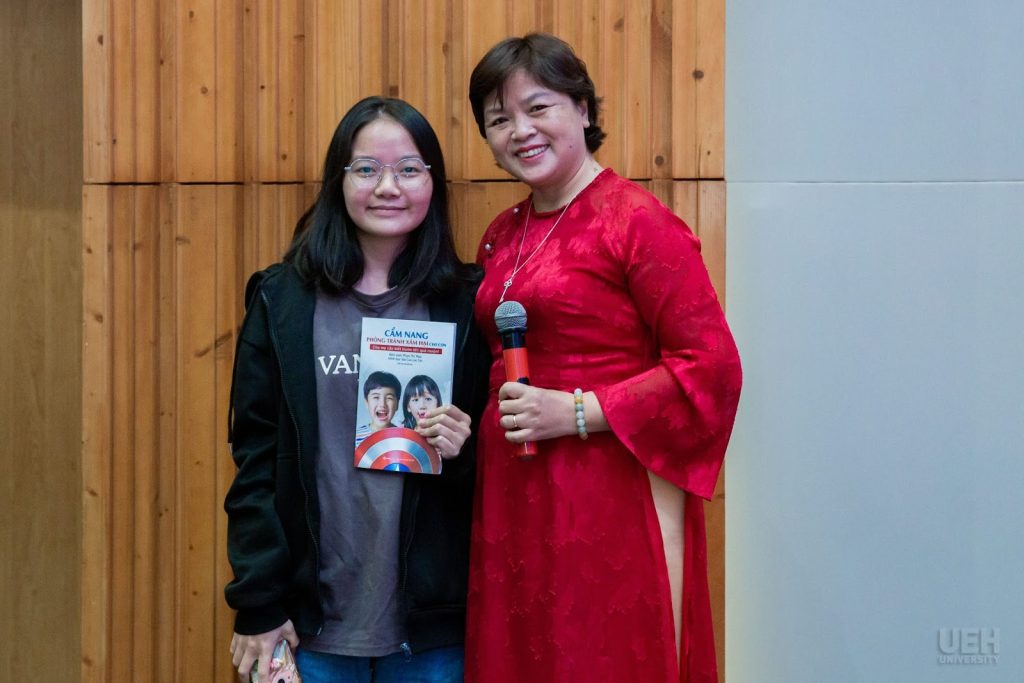
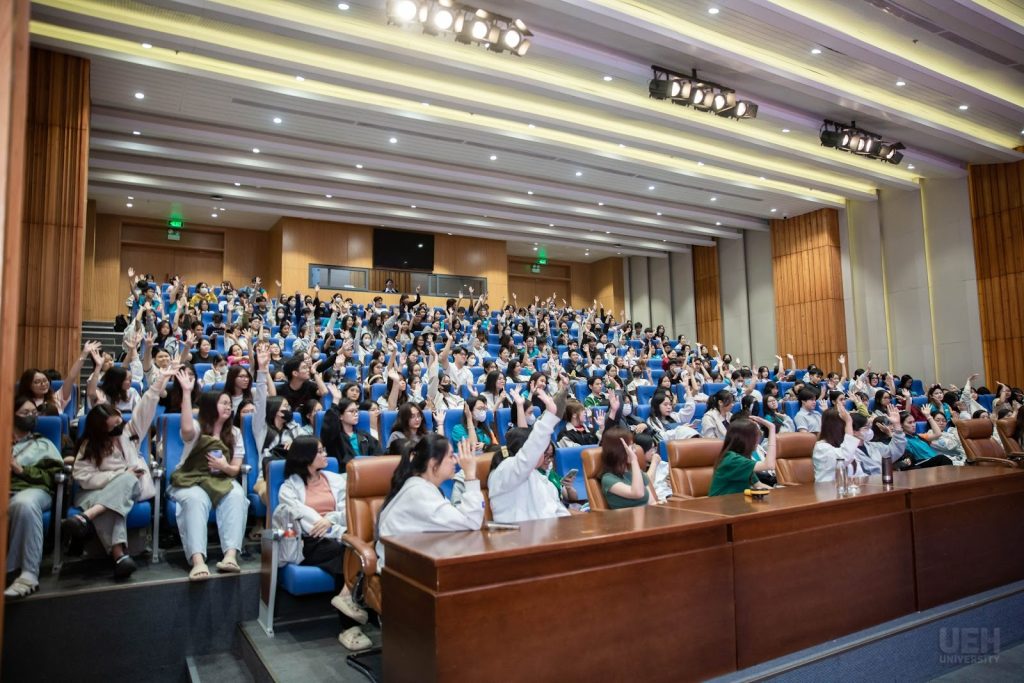
An open and engaging discussion atmosphere
From a legal standpoint, Lawyer Ngoc Nu pointed out that although Vietnam has made efforts to incorporate sexual harassment into legal regulations, these provisions remain vague and insufficiently deterrent. In the Civil Code, violations of dignity and honor are addressed, but enforcement requires proof of psychological harm, which is extremely difficult to measure accurately. Administrative law only refers to “disturbing public order” without clearly defining acts or specific subjects of sexual harassment.
In the workplace, the Labor Code applies only within professional settings and does not address incidents occurring outside the workplace. Meanwhile, the Criminal Code only specifies sexual offenses against minors under 16, without a separate provision for sexual harassment against adults. Even when victims report or initiate legal action, current law places greater emphasis on “evidence” than on testimony, forcing victims to prove the harm they suffered. Yet in sexual harassment cases, psychological trauma is often the most severe consequence, but also the hardest to quantify or translate into material damage. As a result, protecting victims remains extremely challenging, while perpetrators can often evade responsibility. Consequently, current legal responses in Vietnam largely stop at administrative penalties, lacking strong deterrent measures such as isolating offenders from the community to prevent repeat offenses and ensure public safety.
Through the talk show, the speakers gained deeper insight into the real concerns of UEH students. Dr. Pham Thi Thuy highly appreciated UEH’s role as one of the pioneering universities in providing education on sexuality and sexual harassment—topics that remain relatively new in many educational institutions. UEH has also established a comprehensive support process for students facing sexual harassment, accompanied by clear codes of conduct and sufficiently strong sanctions, contributing to a safe, open, and respectful learning environment.
The speakers advised students that when support is needed on campus, they should immediately contact the Department of Student Affairs (DSA) via hotline, email, or in person. In situations occurring off campus (at home or in public spaces), in addition to applying self-protection skills, students can call the emergency hotline 113. They were also encouraged to seek support and advice from family members as a first point of emotional grounding before reaching out for external assistance.
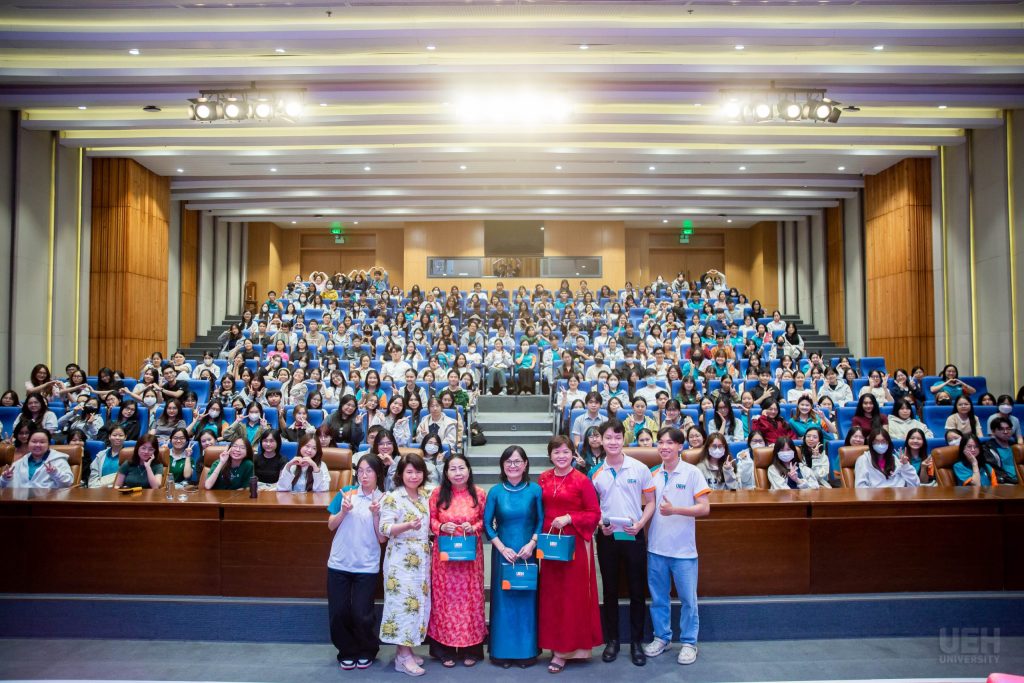
The talk show concluded with a powerful message from the three speakers:
“Understanding yourself is the shield that protects you from risks, and speaking up is how you refuse to remain silent in the face of injustice.”
The sincere and inspiring discussions throughout the program not only helped students gain a clearer understanding of sexual harassment, but also empowered them to speak up to protect themselves and those around them, encouraging Gen Z to dare to think, dare to speak, and dare to act toward a more inclusive, civilized, and progressive society.
Pillars: Operations, Community Engagement
News & Photos: Department of Student Affairs