

In the process of learning English, many learners tend to focus on advanced vocabulary, complex sentence structures, or grammatical rules. However, the workshop “Pronunciation Power, Speaking Success” offered a more practical and accessible perspective: effective pronunciation is not only about producing individual sounds accurately, but also about speech rhythm, body coordination, and awareness of how sounds are physically produced.
Held in a dynamic and engaging atmosphere, the workshop was designed around experiential learning. Participants were encouraged to actively practice, experiment, adjust, and reflect on the sound production process in the oral cavity. As a result, pronunciation became more tangible, understandable, and approachable for learners at different proficiency levels.
At the beginning of the session, the speaker, Ms. Truong Thu Trang, focused on training speech rhythm in English. Participants were guided on how to mark the rhythm of a sentence, helping multisyllabic words sound more natural and connected. This simple technique proved particularly effective for learners who tend to speak with frequent pauses or lack confidence in spoken communication.
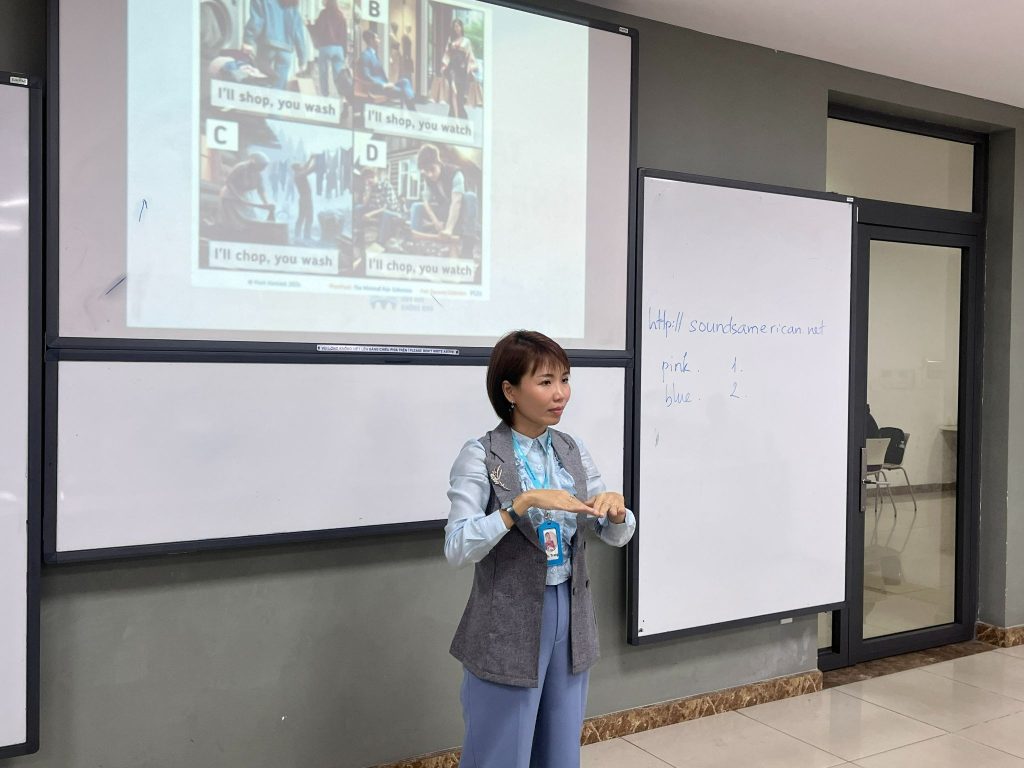
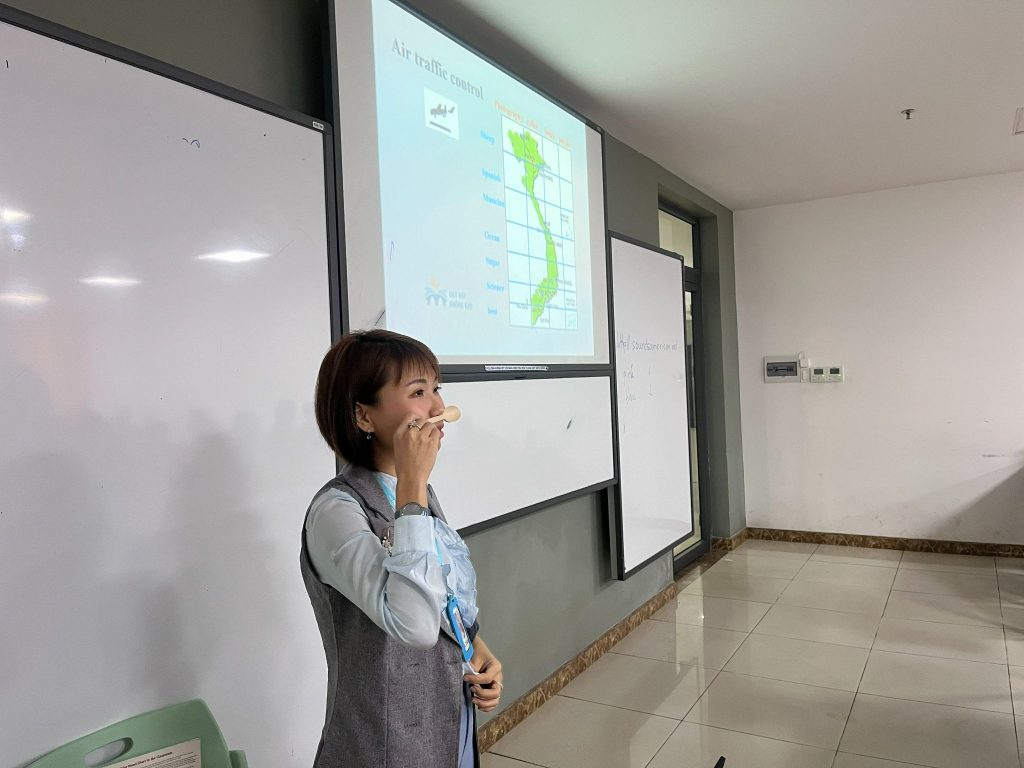
Another key topic that attracted strong interest was the identification and pronunciation of words with easily confusing syllable patterns. Through a step-by-step practice process; listening, analyzing, imitating, and comparing, students not only practiced pronunciation but also gained a clearer understanding of the causes of their errors and how to adjust their articulation accordingly.
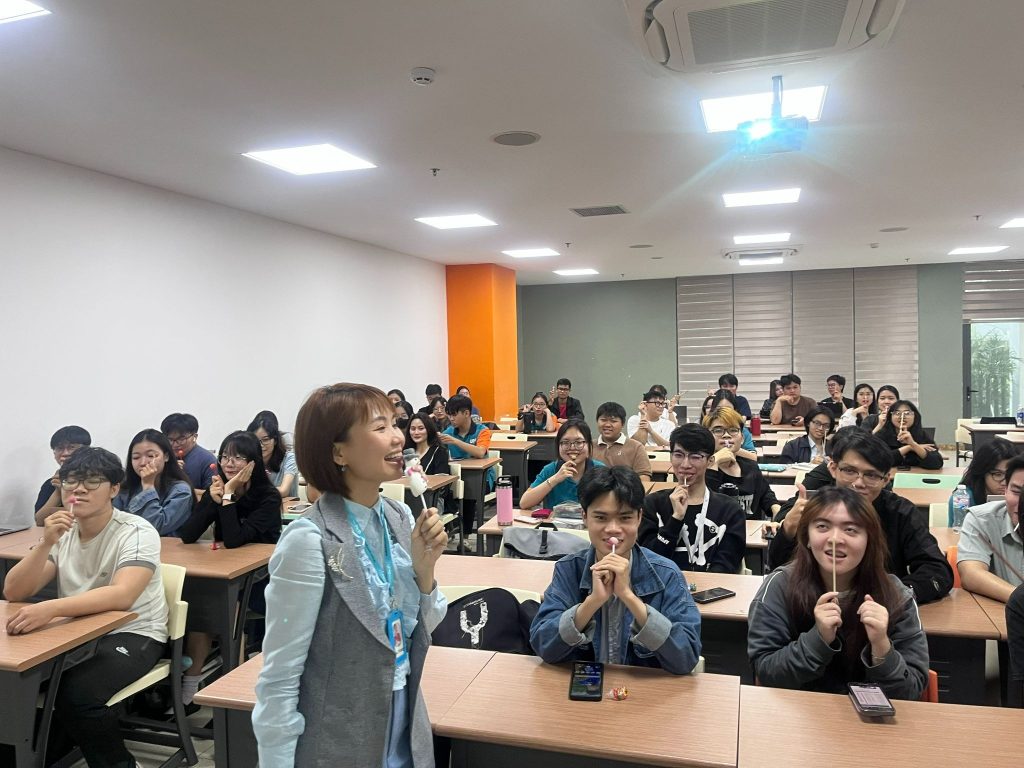
A highlight of the workshop was a hands-on activity using a “lollipop stick”, a simple yet highly effective tool. By placing the stick in front of the mouth while pronouncing challenging consonants, learners could immediately recognize incorrect tongue placement. This visual and tactile approach allowed many participants to clearly perceive and correct their pronunciation errors for the first time.
In addition to practical activities, the speaker analyzed common factors contributing to inaccurate pronunciation, including interference from the mother tongue, limited awareness of lip-teeth-tongue movement, and psychological hesitation when speaking English. Each issue was accompanied by practical solutions that learners could apply directly to their daily practice.
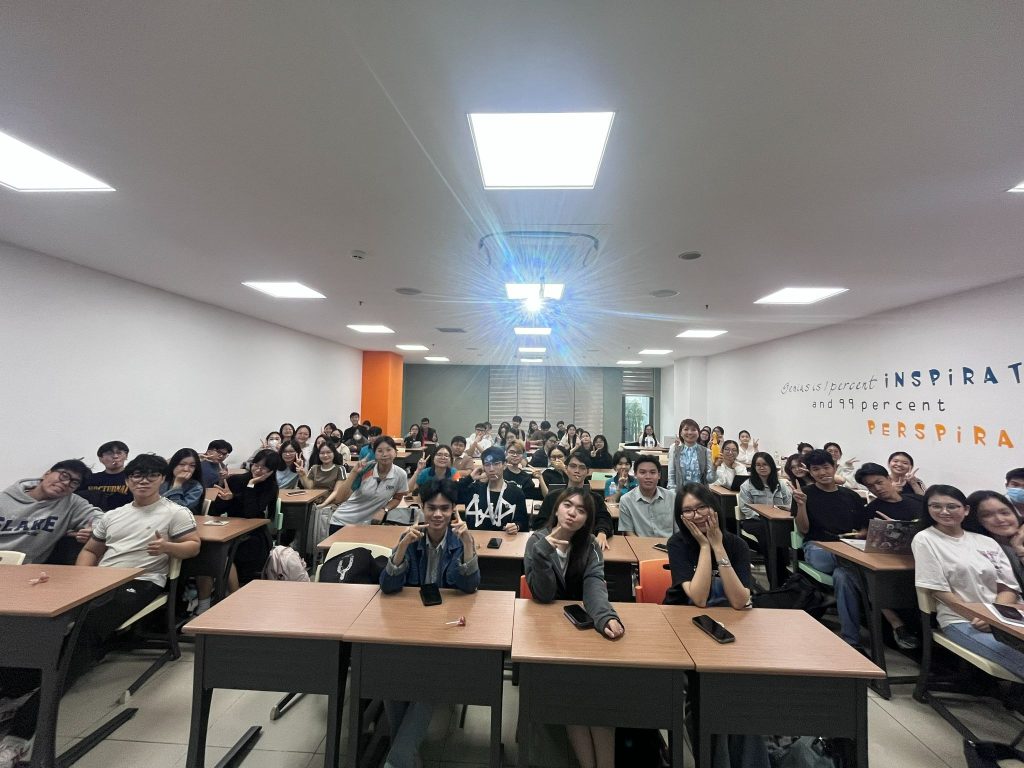
The workshop also incorporated a variety of interactive pronunciation games, creating a positive and open learning environment. Participants’ enthusiasm, immediate feedback, and frequent moments of realization clearly demonstrated the effectiveness of an experience-based learning approach.
By the end of the workshop, learners were encouraged to move beyond the fear of making mistakes and instead observe, listen to, and take ownership of their own sound production process.
This workshop was part of the UEH English Zone Project, a monthly language talk series featuring practical topics that promote proactive, engaging, and effective English learning for the UEH learning community.
To stay updated and register for upcoming programs, please follow the UEH English Zone fanpage.
News & Photos: Department of Student Affairs (DSA)